GHANA - SARAH
-
1
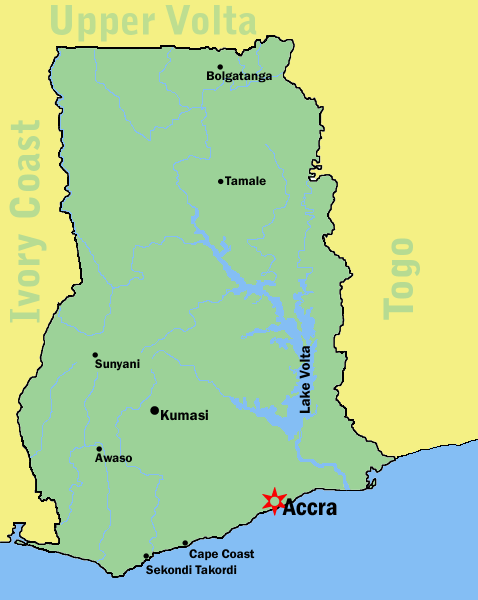
1/14 - Here is Ghana. The country is approximately the same size as Oregon — but far more diverse. There are around 75 different languages (English officially). My placement was in the Northern Region, just about 30-45 minutes north of Tamale. Traveling from the south to the north is like going through several different countries—each complete with different landscape, tribes, languages, and cultures. -
2
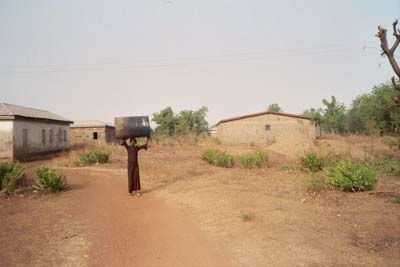
2/14 - The northern part of the country is very poor. Most peoples main source of income comes from farming. The south is richer in agricultural resources, whereas the drought in the north makes farming more and more difficult. The photograph gives an idea of the dryness here. Water is a serious problem, and women carry water on their heads for miles. Here, the girl is carrying an old fuel drum, which is what most people use in their homes to store water. -
3
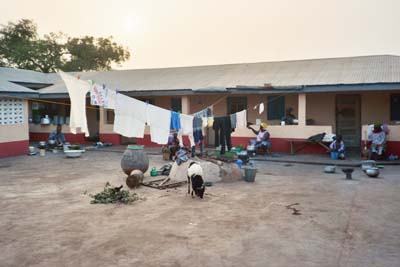
3/14 - I lived in a traditional northern style compound—individual rooms surrounding the open center. The center is where everything takes place…cooking on charcoal pots, hand washing, drying, and it is almost always full of goats and children. There were about 27 people living in the compound, which is larger than most. Most people in the community are from the Dagomba tribe and are predominately Muslim. Another obvious distinction between the south and the north is religion. The south is predominately Christian, and the north is Muslim. However, Muslims and Christians are scattered all over Ghana and live together peacefully. -
4
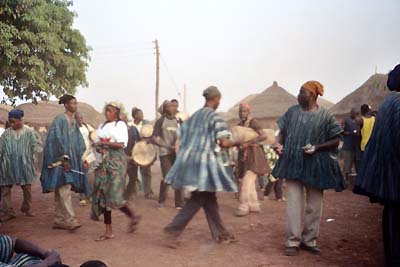
4/14 - The main entertainment in Savelugu (the village where I lived) and common in the north, are funerals. These are usually for an old chief and take place for about a week. The drumming and dancing is repetitive, but the best part about funerals is people watching. In the background of the photograph, you can see the thatch roofed compounds. Most people in the village live in homes similar to this one. Most parts of Savelugu have electricity (for those who can afford it), but since the whole country runs on hydroelectricity and the Lake Volta is frequently low…electricity is not always reliable. -
5
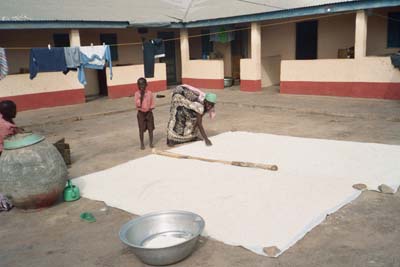
5/14 - This is my neighbor, Sadia, drying maize. They turn the maize into flour, used for the main Dagomba dish, “T-zert.” “T-zert” is simply maize flour and water mixed together, which you then dip into a watery soup. Most Dagomba people love T-zert, but I had a difficult time eating the stuff. -
6
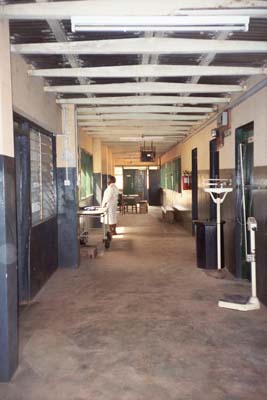
6/14 - This is Savelugu Hospital, which recently turned from a clinic to a hospital. Folks in remote villages also come here. The general ward, pictured here, is a new structure—though it doesn’t really look that way. -
7
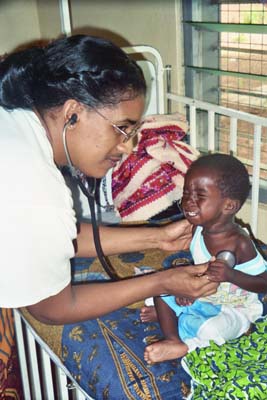
7/14 - The hospital had 2-3 doctors when I was there. One doctor is Ghanaian and the other one or two are from Cuba. This is Dr. Adia on ward rounds. The general ward mostly dealt with pediatrics. There are a lot of seriously ill children coming in, usually with malaria, and anemia and dehydration due to malaria. There is also typhoid fever, meningitis, and malnutrition to name a few. -
8
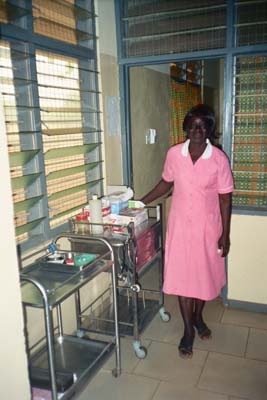
8/14 - This is Mama Esther, a midwife, in the maternity ward. Like the general ward, the maternity ward lacks resources. There also isn’t enough space for sick and pregnant women, so when the ward is full, many of the new mothers must lie on the floor. -
9
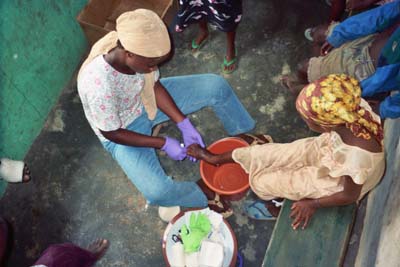
9/14 - Another huge health issue in Savelugu is guinea worm. Guinea worm is a parasite contracted from contaminated water. The contaminated water is always dam water and once swallowed, a female worm grows inside the body for one year before emerging. The actual disease is a bit more complicated than this, but the point is that it is excruciatingly painful (though not deadly) for the host. It is actually very difficult to get this disease, because it doesn’t come from pipe or borehole water—only unfiltered dam water. Mostly children get the disease from swimming and swallowing the water. This is Abibata, working at the guinea worm containment shelter. -
10
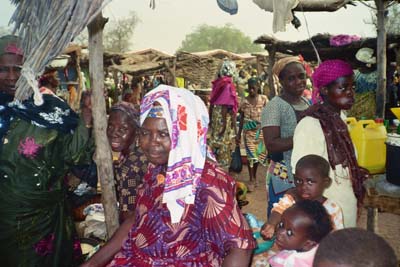
10/14 - Though there are many health and poverty issues in Savelugu, the people make it a wonderful place to live. My favorite part of each week was the Savelugu market—which happened every sixth day. Women from Savelugu and far away villages come and it is a burst of energy and color. The women always thought it was funny that I wanted to take their picture—but they are so beautiful! -
11
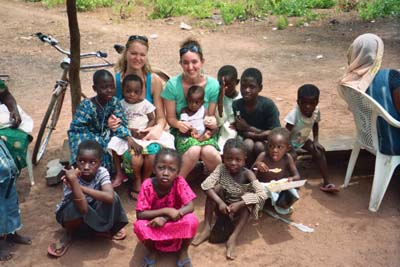
11/14 - Carmen (a German volunteer) and I made friends with a million kids. This is everybody wearing his or her best for a “name giving” ceremony for a newborn baby. I fell in love with these kids, and it was so hard to leave! -
12
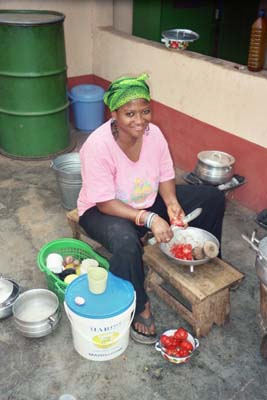
12/14 - This is my host mom, Zeena. This is her kitchen. It feels so strange to be back in an American kitchen with so many unnecessary items! -
13
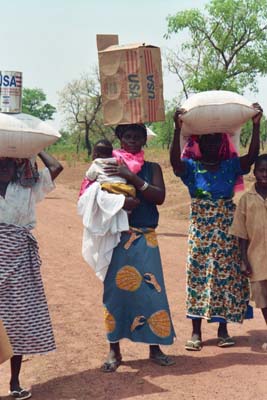
13/14 - We met these women in a remote village on an outreach program. They had walked roughly 5-10 miles with United States donated rice and cooking oil on their heads. I met so many tough women here, and it really puts things into perspective. -
14
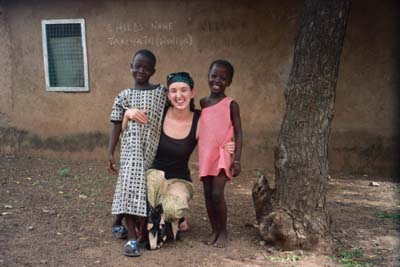
14/14 - Here I am with Fati and Rukaya. These girls are so sweet. I would go back to see them in a second!
Photojournals
- ARGENTINA - Jasmine
- ARGENTINA - Laura
- CAMBODIA - Yaiza
- CHINA - Denada
- ECUADOR - Anam
- ECUADOR - Andrea
- ECUADOR - Annie
- ECUADOR - Natalie
- GERMANY - Chelsea
- GHANA - Julia
- GHANA - Sarah
- GHANA - Susanna
- GUATEMALA - Brooke
- INDIA - Brenda
- INDIA - Olivia
- IRELAND - Amy
- IRELAND - Ryan
- KENYA - Alexandra
- KENYA - Kaitlyn
- KENYA - Kirsten
- KENYA - Sean
- NEPAL - Alex
- NEPAL - Ben
- NEPAL - Jackson
- NICARAGUA - Sarah and Erik
- PERU - Andrea
- PERU - Brianna
- PERU - Kate
- PHILIPPINES - Joanna
- PHILIPPINES - Marie-Louise
- PHILIPPINES - Naho
- POLAND - Robin
- SOUTH AFRICA - Anne
- SOUTH AFRICA - Cassie
- SOUTH AFRICA - Hiawatha
- SOUTH AFRICA - Maria
- SOUTH AFRICA - Stephanie
- TANZANIA - Jennifer
- TANZANIA - Maria
- TANZANIA - Mary Ann & Barbara
- THAILAND - Nancy
- UGANDA - Jordan
- UGANDA - Maggie
- UGANDA - Stephanie